The Cost Of Federal SNAP Cuts in Nebraska
President Trump and Congress passed H.R.1, the so-called “One Big Beautiful Bill Act,” in July of 2025 and cut SNAP food support by $187 billion. Since then, Nebraska SNAP participation has plummeted, food insecurity has risen, and the Nebraska economy has suffered.
One year after the law’s implementation, we must change course to support Nebraskans and take care of our most vulnerable.
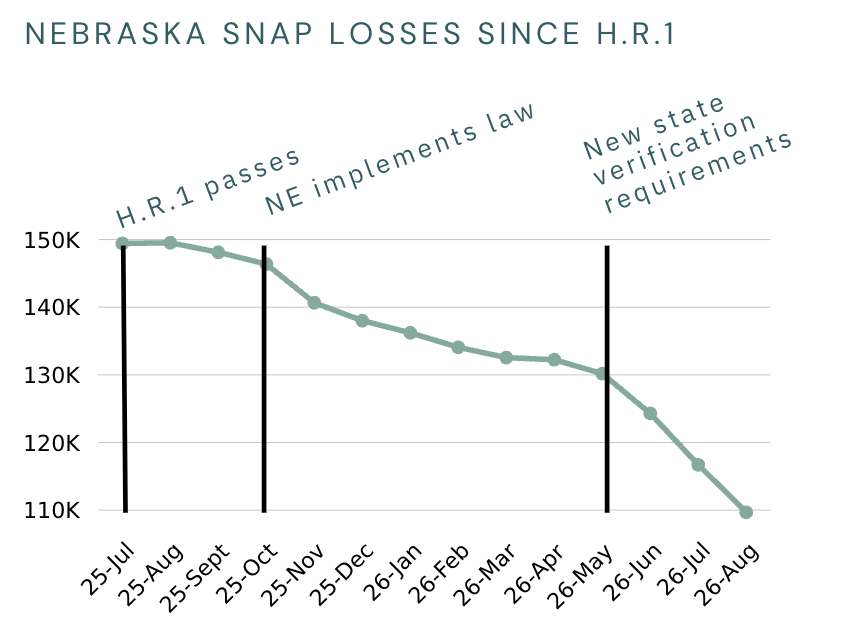
A Growing Crisis: SNAP Losses since H.R.1 passed
Food Insecurity in Nebraska
These losses come from eligibility cuts, work requirement changes, and new burdensome verification requirements our state agency has voluntarily adopted.
Who pays when we cut SNAP?
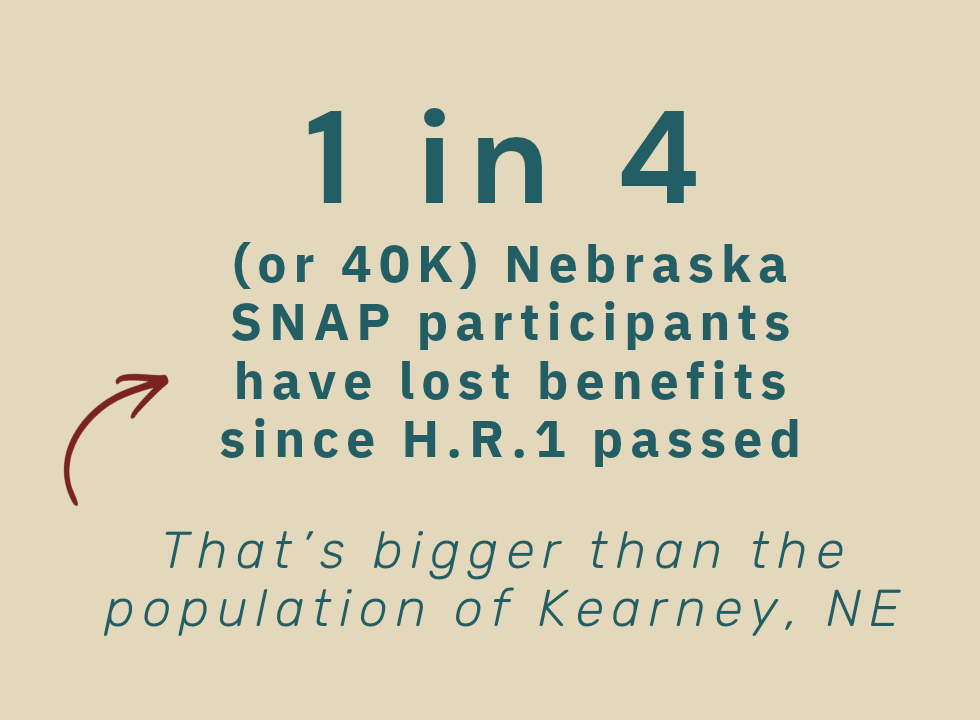
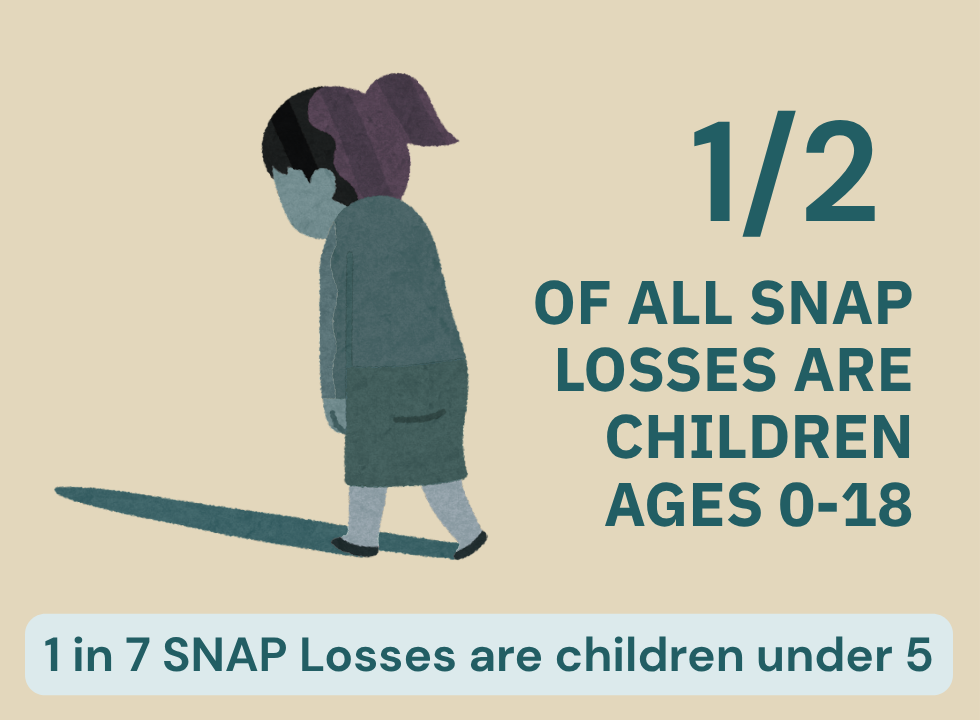
40,000 Nebraskans have lost benefits since H.R.1 passed. HALF of all losses come from children ages 0-18. These families still need food and are forced to turn to overburdened food banks and pantries who cannot keep up with the growing need in our state.

Hungry kids are not set up for success in school or in life. SNAP losses also make it harder for schools to participate in federal programs that expand access to free school meals.
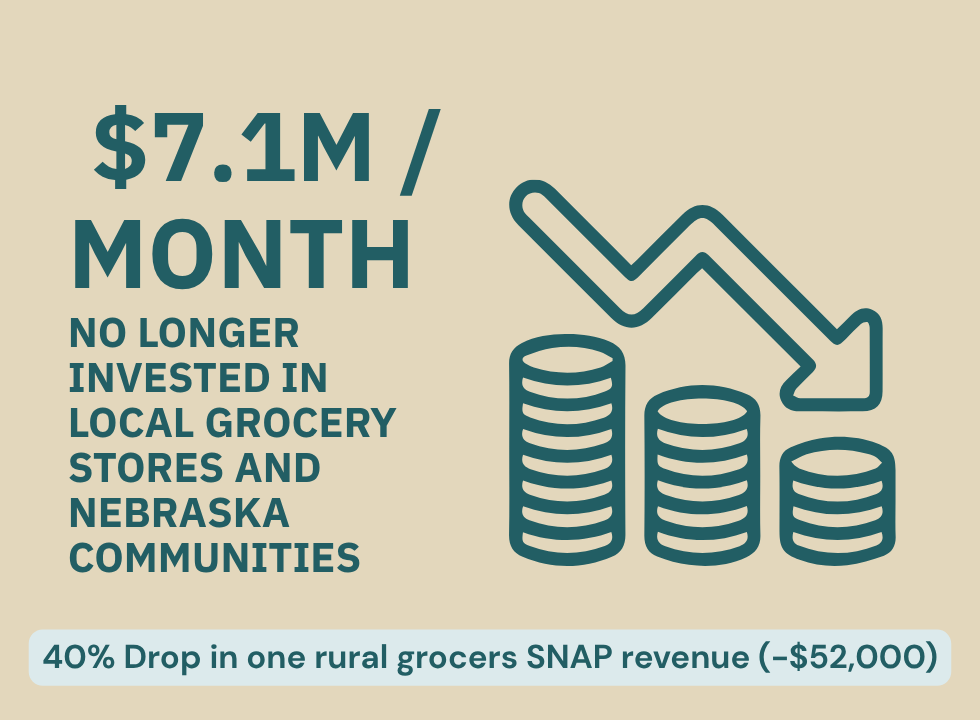
Loss of SNAP revenue is a serious threat to rural grocers. When these stores close, food insecurity rises.
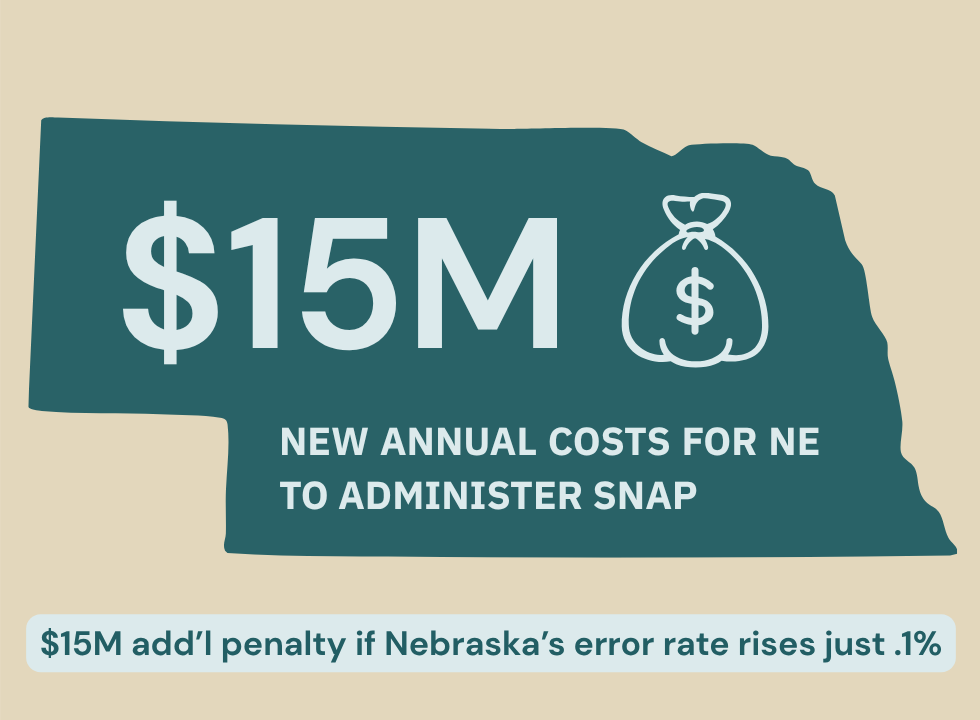
This is a harmful incentive for our state to be overly strict with SNAP verifications to avoid unreasonable federal penalties. We’re already seeing new policies take effect in Nebraska that make SNAP administration more inefficient and costly. This is causing a lot of eligible Nebraskans to slip through the cracks due to processing delays.
In their own words
Hear from a few of the 40K Nebraskans who have lost SNAP.
By the Numbers
40,000
Fewer Nebraskans participating in SNAP
$7.1M / month
Fewer dollars going to Nebraska’s economy
$52K
Drop in one small town grocer’s SNAP income (40% year over year)
27%
Increase in grocery prices since 2020
What’s causing these SNAP participation losses? 3 Main Drivers
1. Expanded SNAP Work Requirements
Able-bodied adults without dependents on SNAP must work 80 hours per month or lose their benefits (sometimes called ABAWDs). H.R. 1 expanded this category to include older adults ages 55-64, parents with children 14+, and removed exemptions for veterans, people experiencing homelessness, and young people aging out of foster care.
2. Changes in SNAP eligibility for immigrant community members
Undocumented immigrants have never been eligible for SNAP. H.R. 1 ended SNAP eligibility for lawfully present immigrants including refugees, asylees, and victims of human trafficking. The few immigrant community members who REMAIN ELIGIBLE also saw significant losses.
3. Nebraska requires new, excessive paperwork
To avoid potential fiscal penalties for SNAP payment error rates, Nebraska DHHS implemented some of the most strict eligibility verification requirements in the country. These are leading to eligible individuals and families losing SNAP. 20,000 SNAP participants have lost SNAP since new verification requirements were implemented in May.
DHHS is struggling to keep up with their own new requirements resulting in seriously deficient application processing (only 49% of standard apps on time and only 76% of emergency apps) plus 24 minute wait times (10 minutes is the standard) in August 2026.
Learn more
October 20, 2026 marks the one year anniversary of H.R.1’s implementation in Nebraska. To learn more about the impacts and dive deeper into the data, read our report and fact sheet.
Take Action
All of our Nebraska members of Congress voted to pass H.R.1. Now Congress and the Nebraska Legislature must take action to strengthen SNAP and repeal these inhumane changes. Look out for ways you can advocate for restoring these losses in SNAP participation on our Take Action page.