
MEDICAID Expansion Work Requirements
Under a new law passed by Congress and signed by President Trump, Nebraskans enrolled in Medicaid expansion will have to meet work requirements or prove an exemption to get coverage. Governor Pillen and Nebraska DHHS started these requirements 8 months early on May 1, 2026.
Medicaid expansion is a specific type of Medicaid that provides health coverage to 70,000 Nebraskans between the ages of 19-64 who have income up to 138% of the federal poverty level (in 2026, about $22,000/year for an individual), and do not qualify for any other type of Medicaid.
Over 1,000 NEBRASKANS WITHOUT MEDICAID BECAUSE OF WORK REQUIREMENTS
- 557 Medicaid applications denied – Nebraskans’ Medicaid applications denied for failure to prove compliance with work requirements through August.
- 533 kicked off coverage Nebraskans lost coverage through August.
But even more Nebraskans are going without coverage because of the work requirements. Though impossible to track, many Nebraskans have been deterred from applying or renewing coverage even though they would still be eligible because of the massive confusion and lack of clear communication about the requirements.
Work Requirement Details
When does This Start?
- New applicants: As of May 1, 2026, applicants who would qualify for Medicaid expansion must meet or prove an exemption to work requirements.
- Existing enrollees: DHHS has started checking Medicaid expansion renewals due on or after July 31, 2026 for work requirements. During this time, DHHS may contact you for more information.
Who is exempt?
There are multiple kinds of exemptions. You may not have to meet the work requirements if you are:
- Pregnant, under the age of 26 and aged out of foster care, a member of a federally recognized Native American tribe, an Urban Indian, a California Indian, or someone who receives services through the Indian Health Service (IHS), a parent/guardian of a child under 14 or a person with disabilities, medically frail (including blindness or disability, substance use disorder, disabling mental health conditions, serious or complex health conditions, or have a serious physical, intellectual, or developmental disability), a veteran with a total disability rating, some people in households that get supplemental nutrition assistance (SNAP) or Temporary Assistance to Needy Families (TANF) and are meeting work requirements for those programs, in a qualified drug or alcohol treatment program, or currently incarcerated or were incarcerated within the last 90 days.
- Other exemptions, sometimes called “short-term hardship exemptions” include situations like being hospitalized or in a nursing facility, traveling outside of your community for health care for yourself or a dependent, or being in a county with high unemployment or a federal emergency.
- Other exemptions also apply.
How do you meet requirements?
If you must meet work requirements, you generally must complete at least 80 hours of qualifying activities in a qualifying month (but not every month, see more details below). This may include full or part-time paid work, self-employment, a work program, school (at least half-time), or volunteering, among other things.
A qualifying month can be different depending on whether you are a new Medicaid applicant or completing your Medicaid renewal. It can also be different depending on whether you are meeting the requirements or qualify for certain types of exemptions (see above for descriptions of “short-term hardship” and other exemptions).
| Activities & Exemptions | Starting Date | Qualifying Months | |
| New applicants | Qualifying activities or short-term hardship exemptions | May 1, 2026 | Month before month of application Example: If applying in May 2026, need qualifying activities (work, school, etc.) or short-term hardship in April |
| Other exemptions (not short-term hardship) | May 1, 2026 | Month of application or the month before Example: If applying in May 2026, exemption in April or May | |
| Enrollees | Any activities or exemptions | For Medicaid cases due for renewal on or after 7/31/26, DHHS will start to check your case on May 1, 2026 | Any one month in your renewal period. In 2026, renewals are usually every 12 months (i.e., if your renewal is due July 31, 2026: DHHS will be checking whether you have any one month with qualifying activities or an exemption since your last renewal which was probably August 1, 2025). Starting in 2027, renewals will be every six months. |
The work requirements are complicated. Stay up to date by subscribing to the Nebraska DHHS Work Requirements website.
Resources
- Medicaid Work Requirements Informational Postcard (English / en español)
- Medicaid Work Requirements Frequently Asked Questions (FAQ)
- HCAN Flow Chart: Medicaid Work Requirements: Does this apply to me?
- Nebraska DHHS Medicaid Website – subscribe to receive updates
- First Five Nebraska website and video
Get Local Help
- For general information, referrals and/or help navigating questions or issues with the process contact Nebraska Appleseed Community Assistance Line neappleseed.org/gethelp
- For free assistance with Medicaid applications or existing coverage contact an assister at a local community health center: howtogetcare.org/find-health-insurance
- For legal assistance appealing an eligibility determination:
- Legal Aid of Nebraska legalaidofnebraska.org or 1-877-250-2016
- nefindalawyer.com
- ne.freelegalanswers.org
Medicaid Expansion is a lifeline for Nebraskans
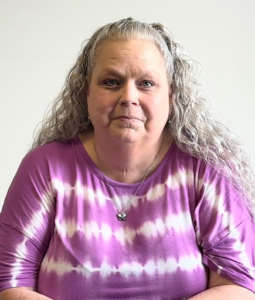
“Unfortunately, without Medicaid expansion, I think I would be dead.” -Missy

“Medicaid expansion saved my life.” – Mary
Work Requirements Don’t Work: This new policy is harming Nebraskans
70,000+ Nebraskans will be subject to Medicaid work requirements. But even more are being impacted.
“Jane”: Blind Mother Nearly Unnecessarily Removes Medically Necessary Port Due to Medicaid Work Requirement Misinformation from DHHS

“Jane Doe” is a mom and a resident of Lincoln, NE. Jane is enrolled in Medicaid and has a child who is on one of the disability-based Medicaid waivers (DD waiver). Her family relies on Medicaid coverage to be able to access health care.
Jane learned about new work requirements for Medicaid from a DHHS employee who told her she would no longer qualify for Medicaid once her youngest child turned 14, even though she is legally blind and has other disabilities, which should meet exemptions to the work requirement. Even though this DHHS staff member was trying to be helpful, their information was incorrect. Jane spent over an hour on the phone with Medicaid eligibility workers and her lawyer to find out that she was not even enrolled in the Medicaid expansion category, which is the only category that will be subject to the new work requirements. Unfortunately, there was no other way to know which category of Medicaid Jane was enrolled in: her category is not listed on the iServe portal and DHHS staff confirmed that the eligibility category does not appear on any notice, a creditable coverage letter, or any other printable document. The only option to answer Jane’s questions was to call DHHS and spend over an hour on the phone. When she first called, the first two DHHS staff she initially spoke with couldn’t confirm her category but thought Jane was likely enrolled in the Medicaid expansion group. It wasn’t until she was able to talk with a third person and specific Medicaid eligibility worker that they could finally check her status and confirm which category of Medicaid Jane has. Ultimately, Jane is on a different category of Medicaid that does not have work requirements, and all of this fear and incorrect information could have been completely avoided.
Before finding out the work requirements do not apply to her, Jane was considering taking drastic measures and undergoing medical procedures to anticipate the loss of necessary Medicaid coverage. Jane consulted her doctor and considered removing a medically necessary port before losing Medicaid. If she had continued down that path, she would have needed to get infusions at the hospital which would involve being away from her kids for three hours or more each time and would reduce her treatments from daily to three times a week. Losing her health coverage would have serious and long-lasting consequences for Jane’s health and her family.
Mellisa: Caught in the Confusion of a Rushed Medicaid Work Reporting Requirements Rollout

Mellisa is a single mother in Lincoln, Nebraska, raising her son Nash on her own while using Medicaid to keep them both healthy. For the better part of a year, she had no idea whether new work reporting requirements would take that coverage away.
“We’ve heard all about the big, beautiful bill and the policy changes that were being implemented, but it was very confusing, not only for me and my son, but other families like us,” she said. She felt overwhelmed by all the changes, and she had no idea whether the requirements applied to her, or what she would do if they did.
Mellisa tried to get answers from her caseworkers, but even they could not tell her what was coming. “Even the workers through DHHS when we would call, and they didn’t even really know how that was all going to play out,” she said. Her EQUIS worker did not know either. “So, I would ask her questions about what was going to happen, you know, when we would do our recertifications… but she didn’t even know,” Mellisa said. The state had just switched to a new computer system, and staff were still being trained on it. “I don’t think it necessarily was that they didn’t want to give me answers as much as they didn’t really have the answers to give anybody.”
Even after the state’s own staff came up short, Mellisa kept pushing for clarity. It wasn’t until she called DHHS with her attorney that she was able to find out she is not on Medicaid expansion and that the work requirements don’t apply to her. Without that call, she said, there was no way to know for certain — families were left waiting on hold, hoping to get through to someone at DHHS who could give them a straight answer. “We already struggle month to month, and not knowing what happens next is a huge barrier on my stress level.”
Mellisa said the rushed rollout has left nothing clear, and that fear and confusion have spread even to people, like her, who turn out not to be subject to the new requirements at all. She pointed out that the impact extends well beyond her own household, touching people with disabilities and parents of young children like her, and that the confusion affects everyone regardless of which Medicaid category they fall under.
Learn more at https://www.familiesusa.org/stories/mellisa-craig-nebraska/
Eli: Grandfather Told He Lost Medicaid Because of Work Issues in the Midst of Cancer Treatment, Causing Appointments to be Canceled

Eli McCrary has spent his whole life in Omaha, Nebraska. He dropped out of high school and earned his GED while incarcerated. After his release, he went on to earn an Associate of Applied Science in Chemical Dependency Counseling from Metro Community College, then a Bachelor of Science in Psychology from the University of Nebraska at Omaha. But for more than 40 years, addiction defined his life.
Within the last year, Eli went through treatment and got sober. “Upon getting sober, you know, I mean, I found out I was diabetic,” he said. “I found out I had high blood pressure, high cholesterol, COPD, and then just recently they diagnosed me with cancer.”
Just as he began treatment for the cancer, found in his right kidney, his Medicaid coverage was cut off. The first he heard of it was when the hospital called. “The hospital actually called me and said, you don’t have insurance anymore, so we had to cancel all your appointments,” he said. “And I’m like, my life is in the balance here. What do you mean we canceled all my appointments?”
Eli tried to explain his situation to his managed care organization. “I’m calling around there saying, you know, you have a work issue that you have to work out, and I’m trying to say, I’m disabled,” he said. “What can I do? I can’t walk. I can’t move around. What would you expect me to do for work?”
Eventually, the managed care organization told him the issue would be resolved because he had just turned 65. “Molina came back and said, okay, we’ll work this out with you and figure out the narrative later about, but you’re 65, you’re entitled to Medicare or Medicaid at this point on regardless,” he said. But by then, he had to start over, rebuilding the same appointments that had already been scheduled before the cancellation. The delay caused by the lapse in coverage was over two months. Eli added, “The time lapse has actually cost me time of my life.”
Learn more at https://www.familiesusa.org/stories/eli-mccrary-nebraska/
Cheri: A Survivor’s Path From Trauma to Treating It in Others — With Medicaid Making It Possible

Cheri Stollar grew up in Lincoln, Nebraska. Today, Cheri is a provisionally licensed therapist in Nebraska working toward her independent mental health practitioner license.
Cheri’s own health has been shaped by years without insurance. At one point, her health declined sharply enough that she ended up in the emergency room. “I might’ve, if I hadn’t gone to the hospital when I did, I would have died,” she said. She did not have Medicaid at the time.
As a provider, Cheri sees the consequences of Medicaid work requirements up close. She estimated that 95% of the clients in her therapy practice rely on Medicaid. She said she has already lost clients who could not meet work requirements because of their mental health conditions, even while they were still in the process of applying for Social Security. “These people have pretty severe diagnoses,” she said, describing one client with borderline personality disorder who is now unable to continue therapy. “That’s a diagnosis that somebody needs help with, and yet they’re also a higher risk for suicide and self-harm.” She called the work reporting requirement “very unfair” and “downright harmful.”
She also raised similar concerns about her own situation as it pertains to reporting requirements. “I do have concerns,” she said. “I guess I work, but my schedule isn’t like a clock in clock out nine to five. It basically revolves around meet my client’s needs,” she said, pointing also to her children’s appointments and school schedules.
Learn more at https://www.familiesusa.org/stories/cheri-stollar-nebraska/
Lee: Working Hard, Still Falling Through the Gaps

Lee has worked his entire adult life. At 28, he holds a full-time job in the food industry in Lancaster County, Nebraska, putting in the hours and navigating the unpredictability that comes with his line of work. Lee’s employer offers no health benefits, making his Medicaid coverage essential. “Medicaid is a big thing for me,” he said.
Lee’s health issues are centered largely on his oral health. Beyond the dental challenges, Lee faces a broader uncertainty that has followed him since Nebraska began rolling out Medicaid work requirements. He received the state’s letter about the new criteria and found it deeply confusing. His income fluctuates week to week depending on labor demands in his industry. “If I don’t make enough income, or if I make too much income, then they want us to meet right between this, whatever number they put — it makes no sense,” he said. The idea that earning too many hours in a good week could potentially jeopardize his coverage, while earning too few could also put him at risk, left him feeling trapped in an impossible standard. “It’s weird where they put their standards. It’s very just unknowing, but I try to meet it.”
Lee’s experience reflects a reality that is common among Medicaid enrollees who work in hourly, variable jobs without employer-sponsored benefits. He is doing everything right, working hard, paying taxes, showing up, and still finds himself scrambling.
For Lee, Medicaid is not a preference or a convenience. It is the difference between having any access to health care and having nothing. He is working full time and doing his best to navigate a system that was already complicated before the new red tape from HR1.
Learn more at https://www.familiesusa.org/stories/lee-thompson-nebraska/
Crystal: Being Alive Is a Prerequisite to Being Able to Work

Crystal is a disabled 30-year-old non-binary artist from Kearney, Nebraska, navigating a complex web of disabilities with the help of Tarot, a service dog. They hold a Bachelor of Fine Arts from the Kansas City Art Institute. They rely on Medicaid expansion to access the mental health care and medications that make daily life possible.
Finding new work in Kearney is not simple when you have a service dog. “When you have a service dog, your job options are automatically limited,” they explained. The majority of jobs available in small, rural Nebraska are in the manufacturing, medical, and food service industries, which either pose safety risks for a working dog or run afoul of health department rules.
Beyond physical health, Medicaid has funded the mental health care they credit with keeping them stable. After trying several medication combinations, they have finally found a regimen that is working. The thought of losing access to those medications as work requirements reshape Medicaid eligibility frightens them deeply. “One of the things that has been a huge weight on my mind is the idea of losing access to my medications because they’re working now,” they said. “This is the first time where I felt like they actually are making a difference and making things better.”
Learn more at https://www.familiesusa.org/stories/crystal-schroer-nebraska/
Want to share your experience or get involved?
Email Freedom at fthompson@neappleseed.org.