
New data from the Nebraska Department of Health and Human Services shows that half (48.65%) of all Nebraskans who are no longer participating in SNAP since the passage of H.R.1, or the One Big Beautiful Bill, are children.1 That’s around 16,500 children, ages 0-18.2 Thirty-five percent of the total loss are older children, ages 5-18. Thirteen percent of the total loss is made up of infants, toddlers, and young children, ages 0-4.
We’ve described projected H.R. 1 SNAP impacts, participation loss demographics, and the state’s optional new verification rules that are resulting in enormous losses in food assistance. This new data shows the shocking loss for kids who have no control over their circumstances and feel the impacts of not having enough food in childhood throughout their lives.
Loss of SNAP participation on school nutrition programs
In addition to the direct loss of SNAP benefits, which can impact food security and academic performance, loss of SNAP means fewer kids are getting the meals they need at school. This is because children who receive SNAP are automatically eligible for free school meals during the school year and Summer EBT when school is out. Loss of this automatic eligibility means that at least some families will not enroll in free or reduced-price meals because of the red tape and paperwork required to do so. Additionally, lawfully-present immigrant neighbors who are no longer eligible for SNAP may not be willing to give out their information on a government form for fear of being targeted for deportation or harassment in other ways.
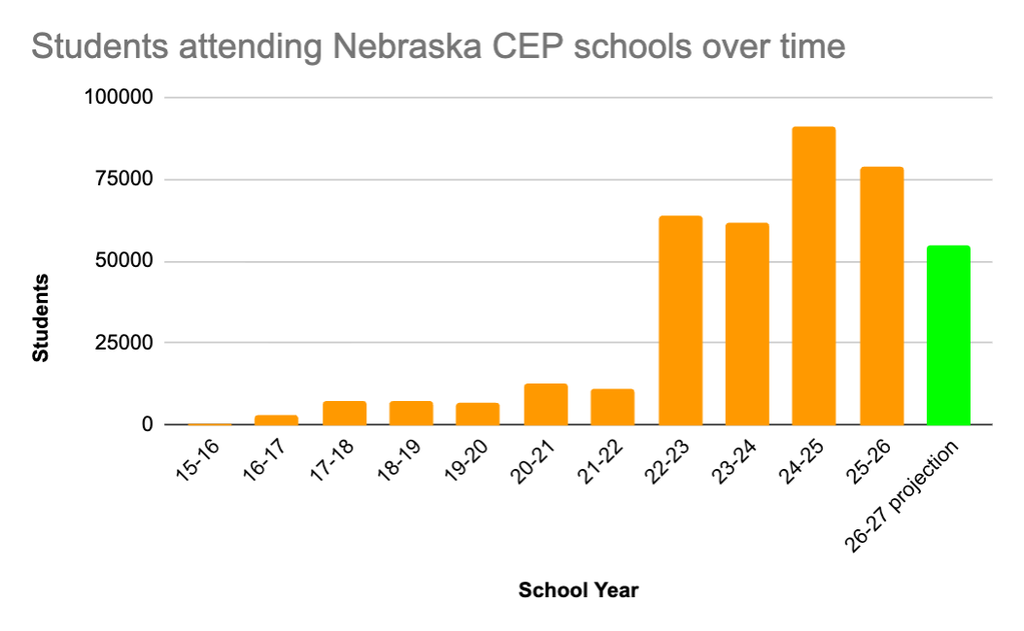
A school’s eligibility for programs that serve free meals to all students suffers from the loss of SNAP benefits as well. For example, the Community Eligibility Provision, which provides free breakfast and lunch in high poverty areas to students regardless of income, will see a drop in the number of students participating in SNAP, which results in a lower reimbursement for meals served. This means districts around the state will be forced to drop participating schools, take on more unpaid meal debt, and experience financial struggles for school nutrition programs that already operate on a shoestring.
Appleseed projects CEP participation in the coming years to decrease as schools end their 4 -year CEP cycles. Larger participating districts will likely end free meals through CEP in at least some schools due to potential financial challenges after so many students have lost SNAP.
We must reverse course
People are losing SNAP because of documentation barriers, not because someone solved hunger last summer. Fewer people on SNAP means hungry people, half of which are children, are experiencing more strain and struggle, and making more trips to limited food pantries and food banks. It also means more long term pain for school nutrition programs and educators for the foreseeable future.
Nebraska’s federal delegation rubber stamped these changes by voting for the One Big Beautiful Bill Act (H.R. 1). Nebraska state senators need to do what they can to mitigate the harm or reverse it.
- Based on data provided to Nebraska Appleseed via Department of Health and Human Services open records request on 9.10.26. This number includes children ages 0-18. ↩︎
- As of July 2026, we have lost over 34,000 individuals https://dhhs.ne.gov/Pages/ACCESSNebraska-Performance-Measures.aspx#docaccess-9ba52330197fd447e75fba0e4da18c38. ↩︎